

Heat vs. Ice – What to Use and When
Written by: Dr. Brittany Buckley
You twist your ankle or wake up with a stiff back : what's the first question that comes to mind?
"Should I use heat or ice?"
It's one of the most common questions we get at Dynamic Edge PT. And honestly? Most people get it wrong. They reach for the heating pad when they should be icing. Or they ice a tight muscle when heat would actually help.
The good news is that once you understand the basics, choosing between heat and ice becomes pretty straightforward. Let's break it down so you never have to second-guess yourself again.
Understanding How Each One Works
Before we dive into when to use what, it helps to understand why these two therapies work so differently.
Ice (Cryotherapy) works through a process called vasoconstriction. That's just a fancy way of saying it narrows your blood vessels. When blood vessels constrict, less blood flows to the area. This reduces swelling, limits inflammation, and numbs pain signals. Think of it as putting the brakes on your body's immediate inflammatory response.
Heat does the opposite. It causes vasodilation : widening those blood vessels. More blood flow means more oxygen and nutrients reaching your tissues. This helps muscles relax, reduces stiffness, and supports your body's natural healing process.
Same injury. Two completely different approaches. And using the wrong one can actually make things worse.
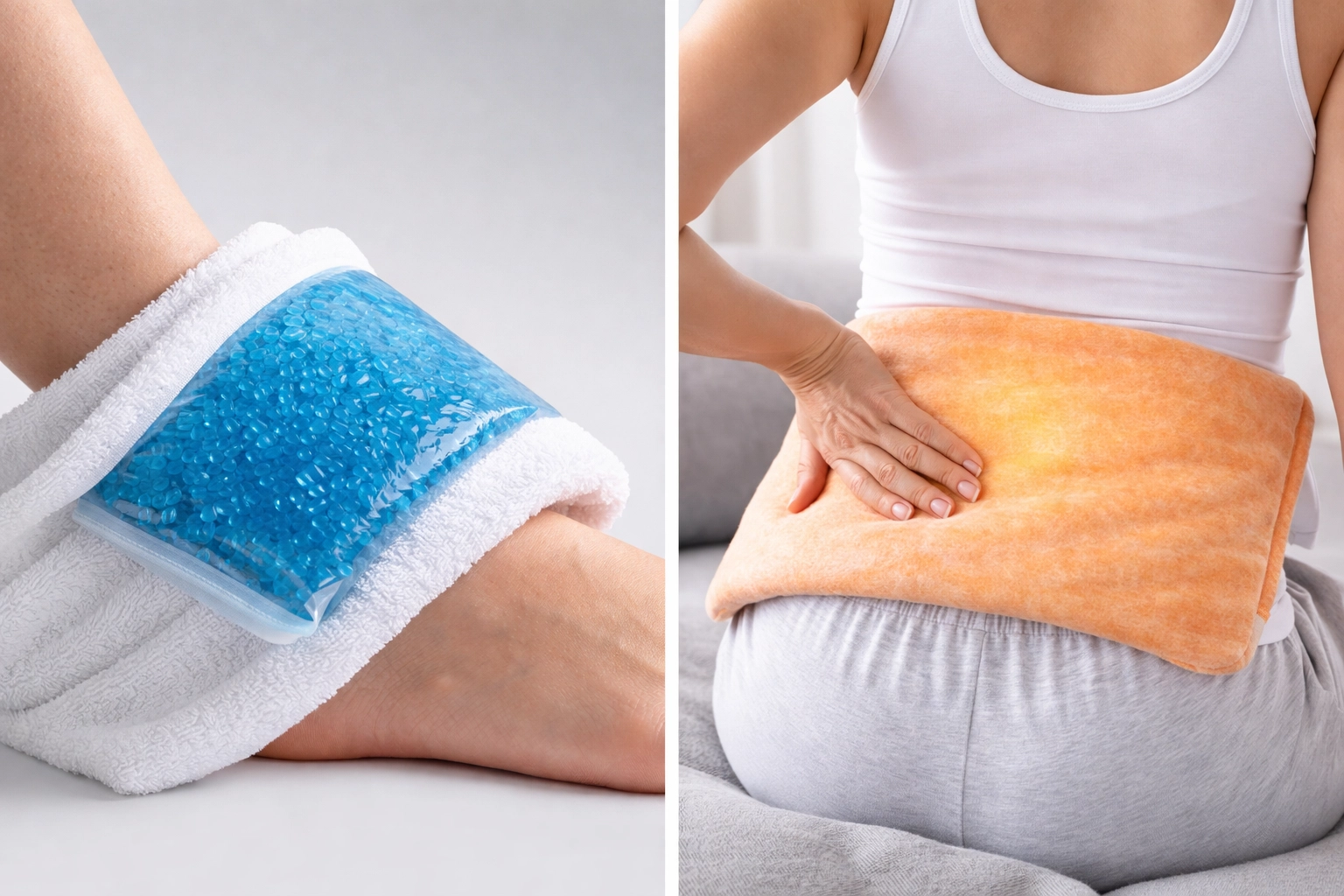
When to Use Ice
Cold therapy is your go-to for fresh injuries and acute inflammation. If something just happened : you rolled your ankle, tweaked your back lifting something, or felt a sudden sharp pain : ice is usually your first line of defense.
Ice is best for:
Acute injuries (within the first 24–72 hours)
Visible swelling or inflammation
Sharp, intense pain
Bruising
Post-surgical pain and swelling
New flare-ups of existing conditions
Common examples where ice works best:
A sprained ankle
A swollen knee after a long run
A sudden shoulder flare-up
Post-workout inflammation
Fresh sports injuries
How to apply ice properly:
Use ice for 15–20 minutes at a time. Always use a barrier between the ice pack and your skin : a thin towel works perfectly. Direct ice-to-skin contact can cause frostbite or skin damage.
Wait at least 45 minutes to an hour before reapplying. You want to give your tissues time to return to normal temperature.
A word of caution about ice:
Here's something many people don't realize. Ice is now considered best for short-term pain management only. Why? Because inflammation is actually essential for healing.
Your body's inflammatory response sends healing cells to the injured area. If you ice too aggressively or for too long, you might delay tissue repair. Use ice to manage pain and control excessive swelling : but don't overdo it.
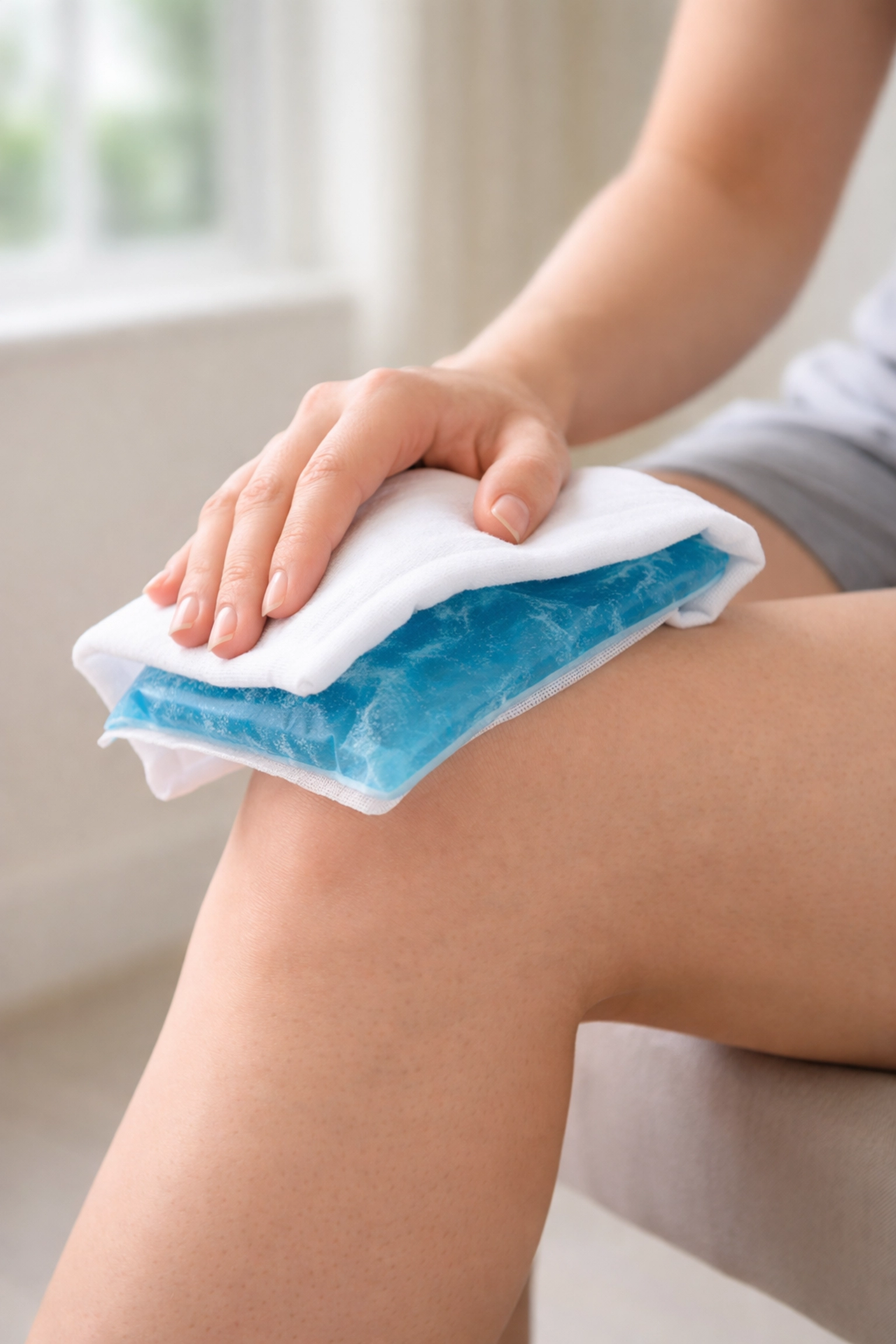
When to Use Heat
Heat therapy is your friend when dealing with chronic issues, muscle tension, and stiffness. If your pain has been hanging around for a while, or if your muscles feel tight and achy, heat is usually the better choice.
Heat is best for:
Chronic muscle tension
Stiff joints
Low back tightness
Neck stiffness (especially morning stiffness)
Muscle guarding and spasms
Nerve-related pain like sciatica
Before activity or stretching
Common examples where heat works best:
Morning stiffness in your neck
Tight hamstrings that just won't loosen up
Old shoulder pain that flares up occasionally
Chronic low back aches
General muscle tension from stress or poor posture
How to apply heat properly:
Apply moist heat or a heating pad for 15–20 minutes. Moist heat tends to penetrate deeper than dry heat, so a warm damp towel or a microwavable heat pack often works better than an electric heating pad.
Keep the temperature comfortable : around 104°F (40°C) is considered safe and effective. You want warmth, not burning.
When NOT to use heat:
This is crucial. Never use heat on a fresh injury. If the area is already swollen, red, or hot to the touch, adding more heat will increase blood flow and make the inflammation worse.
Heat too soon after an injury is one of the most common mistakes we see.
The Golden Rule
Here's the simplest way to remember which therapy to use:
If it's swollen, red, or hot : use ice.
If it's tight, achy, or stiff : use heat.
Write that down. Stick it on your fridge. It'll serve you well.

The Advanced Approach: Contrast Therapy
For some conditions, alternating between ice and heat can be incredibly effective. This is called contrast therapy.
Here's how it works: You apply ice for about 20 minutes to constrict the blood vessels. Then you switch to heat for 15 minutes to dilate them. This creates a pumping mechanism that helps push inflammation away from the area while bringing in fresh, oxygenated blood.
Contrast therapy can be particularly helpful for:
Chronic injuries with occasional flare-ups
Recovery after intense workouts
Stubborn areas that don't respond to ice or heat alone
If you're unsure whether contrast therapy is right for your situation, ask your physical therapist. We can help you figure out the best approach for your specific condition.
Common Mistakes to Avoid
Even with the best intentions, people make these errors all the time:
Using heat too soon after an injury. We can't stress this enough. If you tweaked something today, put down the heating pad. Reach for ice first.
Icing for too long. More isn't always better. Stick to 15–20 minute sessions. Prolonged icing can damage skin and potentially slow healing.
Applying ice or heat directly to skin. Always use a barrier. Your skin will thank you.
Using heat on an already inflamed area. If it's swollen and hot, adding heat is like adding fuel to a fire.
Ignoring persistent pain. Home remedies like ice and heat are great for minor issues. But if your pain isn't improving after a few days : or if it's getting worse : it's time to see a professional.
Pain that spreads, comes with numbness or weakness, or doesn't respond to home treatment needs proper evaluation. Don't wait until a small problem becomes a big one.
When to Skip the Home Remedies and See a PT
Ice and heat are fantastic tools. But they're just that : tools. They manage symptoms. They don't fix underlying problems.
If you're dealing with:
Pain that keeps coming back
Limited range of motion
Weakness in a joint or muscle group
Pain that interferes with sleep or daily activities
An injury that isn't healing as expected
...it's time to get a professional assessment. A physical therapist can identify what's actually causing your pain and create a plan to fix it : not just mask it.
At Dynamic Edge PT, we take a hands-on, personalized approach to help you move better and feel better. No cookie-cutter programs. Just real solutions for your specific situation.
Ready to Move Better, With Less Guesswork?
Tired of wondering whether to reach for the ice pack or heating pad? We get it. And we're here to help.
Whether you're dealing with a nagging injury, chronic stiffness, or just want to stay ahead of problems before they start, our team at Dynamic Edge PT is ready to guide you.
Call us at 203.978.3343 or emailinfo@dynamicedgept.com to schedule your visit.
Let's get you moving : the right way.
![[HERO] The Pain Iceberg: Why What You Feel is Just the Beginning](https://cdn.marblism.com/diJvXUUFkRh.webp)
![[HERO] Supplements & Peptides: The](https://cdn.marblism.com/IW4Zs9hiDRg.webp)
![[HERO]](https://cdn.marblism.com/eKKysnpuhWV.webp)
![[HERO] Seeing Red: Why Red Light Therapy is Your Recovery](https://cdn.marblism.com/uQuDbRSJkVL.webp)
![[HERO] Sweet & Sore: Is Sugar Keeping You on the Sidelines?](https://cdn.marblism.com/OzrDlhWJFmI.webp)
![[HERO] Heat vs. Ice – What to Use and When](https://cdn.marblism.com/aWoflw3QKLB.webp)


Comments