

Sweet & Sore: Is Sugar Keeping You on the Sidelines?
"You are what you eat."
Still sore after you do the plan. Still stiff after you do the exercises. Still puffy around the joints.
Why?
How much refined sugar are you eating... and how often?
Refined sugar drives higher blood glucose. It increases oxidative stress. It raises inflammatory signaling in the body.
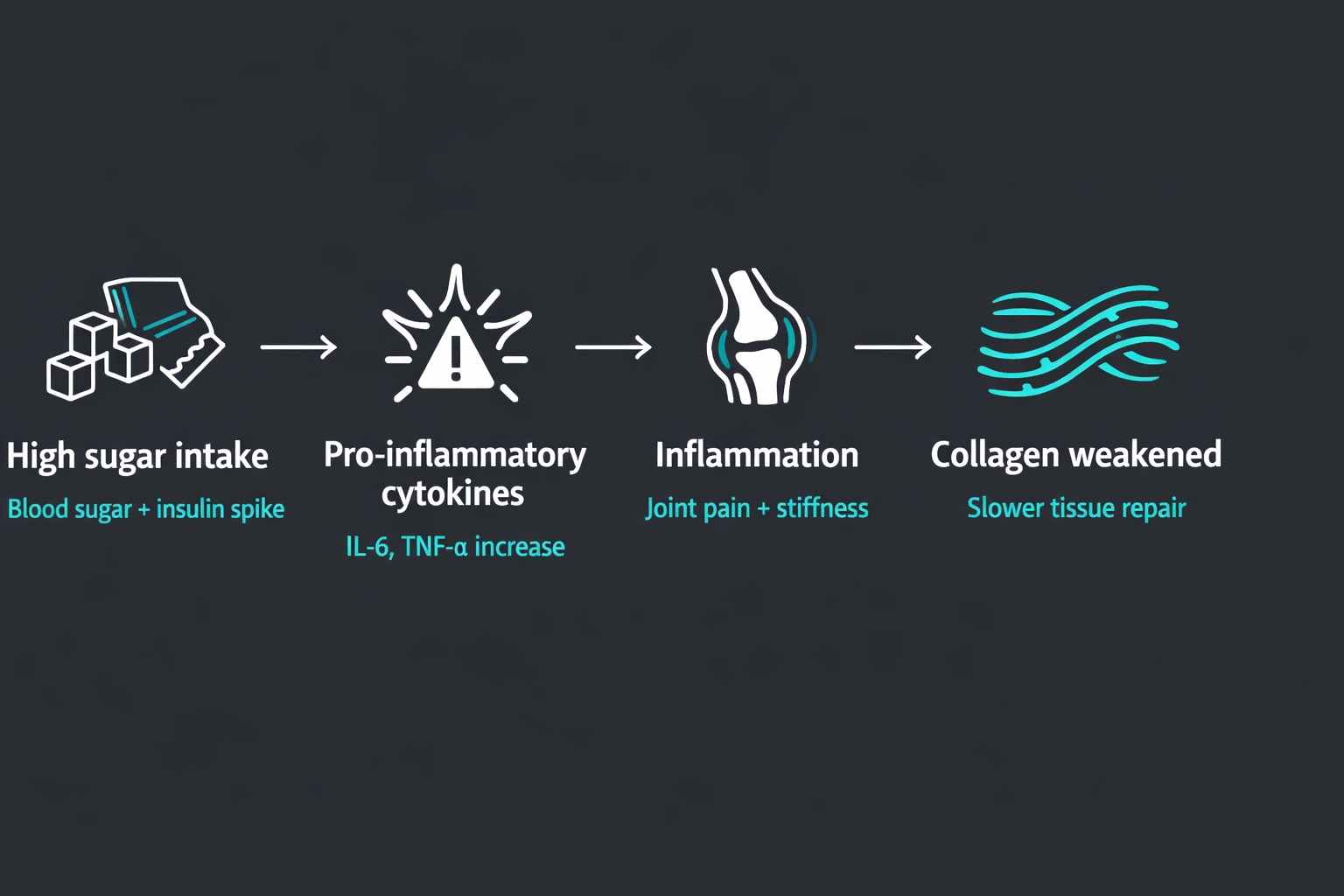
Evidence links high-sugar diets to increased pro-inflammatory cytokines like TNF-α and IL-6 in humans. These cytokines support a chronic, low-grade inflammatory state. That state interferes with recovery.
What does that mean for tissue repair?
Refined sugar also accelerates glycation. Glycation forms advanced glycation end products (AGEs). AGEs cross-link collagen. Collagen becomes stiffer and more brittle. Collagen turnover and remodeling slow down. Collagen breakdown becomes easier under load.
Do you want your tendon, ligament, or joint capsule trying to heal in that environment?
The Sugar-Inflammation Connection
Refined sugar intake is associated with higher inflammatory markers and cytokine activity in the body. Studies in nutrition and immunology consistently show diet can shift cytokines like IL-6 and TNF-α upward when added sugars are high.
Those cytokines matter in rehab. Inflammation changes pain sensitivity. It changes swelling. It changes recovery capacity.
Infographic: Sugar → Inflammation → Pain → Slower Repair
What This Means for Your Joints and Muscles
Inflammation affects the exact tissues you are trying to rebuild. Tendons. Ligaments. Joint cartilage support structures. Muscle connective tissue.
Collagen is the main structural protein in these tissues.
Refined sugar increases AGE formation through glycation. AGE cross-links make collagen less elastic and more prone to micro-damage. Research in connective tissue biology shows AGE accumulation is associated with reduced collagen quality and impaired mechanical properties.
Do you want stiff, brittle collagen while you are loading a healing shoulder or knee?
Evidence also connects higher added sugar patterns with worse cardiometabolic and inflammatory profiles, including cytokine activity that can keep tissues in an inflamed state.
Sugar does not “cause” every ache. It does change the recovery environment.
The Healing Process Slows Down
Healing requires controlled inflammation. It requires collagen remodeling. It requires good sleep and steady energy.
High refined sugar intake increases inflammatory signaling and can worsen glycemic swings. That combination makes recovery harder to manage.
Are you doing great in the clinic and losing ground at home?
"But I Feel Fine..."
Chronic, low-grade inflammation often feels normal.
Look for:
Joint puffiness
Soreness that lasts longer than expected
Stiffness that returns fast after activity
Afternoon energy crashes
Poor sleep
Slower recovery between workouts
Do any of these keep showing up?
The Hidden Sugar Problem
Added sugar shows up in foods marketed as healthy.
Yogurt. Sports drinks. Granola. Sauces and dressings. Protein bars. Bread.
Do you check “added sugars” on labels?
The American Heart Association recommends no more than 25 grams of added sugar per day for women and 36 grams for men. Most Americans consume more than double that amount.
A single flavored coffee drink? That's 30–50 grams. A bottle of sports drink? Another 30 grams. You can hit your daily limit before lunch without even realizing it.
What You Can Do Starting Today
Use simple rules.
1. Check added sugar. Keep it low most days.
2. Swap the default. Water instead of sweet drinks. Plain yogurt instead of flavored. Whole fruit instead of juice.
3. Plan recovery carbs. Choose potatoes, rice, oats, and fruit more often than bars and sweetened “recovery” drinks.
4. Run a 14-day test. Cut added sugar. Track morning stiffness, joint puffiness, sleep, and workout recovery. What changes?
Beyond the Clinic Walls
Your recovery continues outside the clinic.
Hands-on therapy and exercise work best with low baseline inflammation and better collagen remodeling conditions.
Do you want faster progress with the same effort?
At Dynamic Edge Physiotherapy, we keep the plan practical. We treat the injury. We also address the inputs that affect healing.
The Bottom Line
Refined sugar is linked to higher pro-inflammatory cytokines like IL-6 and TNF-α in dietary studies. It also increases AGE formation that can stiffen collagen and worsen collagen quality over time.
Are you trying to rebuild tissue with one foot on the brake?
Call us today 203.978.3343 or email us to get back on track.

![[HERO] The Pain Iceberg: Why What You Feel is Just the Beginning](https://cdn.marblism.com/diJvXUUFkRh.webp)
![[HERO] Supplements & Peptides: The](https://cdn.marblism.com/IW4Zs9hiDRg.webp)
![[HERO]](https://cdn.marblism.com/eKKysnpuhWV.webp)
![[HERO] Seeing Red: Why Red Light Therapy is Your Recovery](https://cdn.marblism.com/uQuDbRSJkVL.webp)
![[HERO] Sweet & Sore: Is Sugar Keeping You on the Sidelines?](https://cdn.marblism.com/OzrDlhWJFmI.webp)
![[HERO] Heat vs. Ice – What to Use and When](https://cdn.marblism.com/aWoflw3QKLB.webp)


Comments